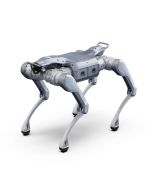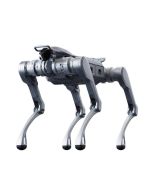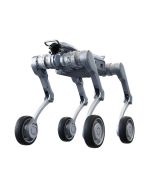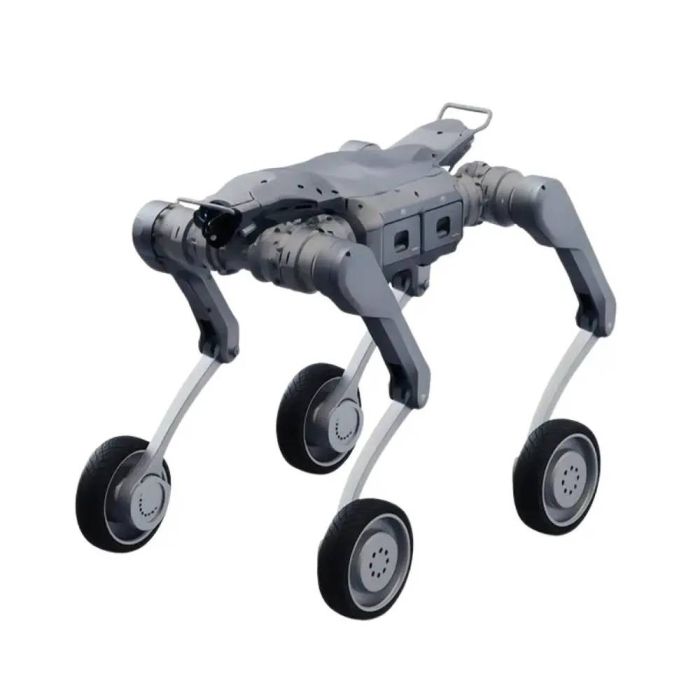

The Unitree A2-W Pro is the advanced wheel-legged industrial quadruped robot dog with dual LiDARs for zero-blind-spot awareness, expanded GPS/4G, higher IP protection, and optional high-compute expansion. It delivers the same ~52kg platform, high range, and payload performance for custom autonomous industrial missions.
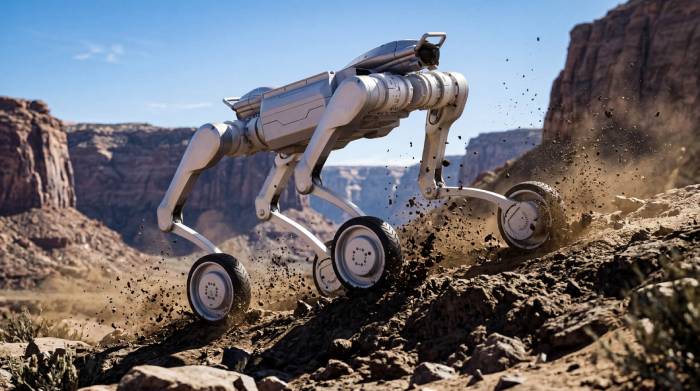
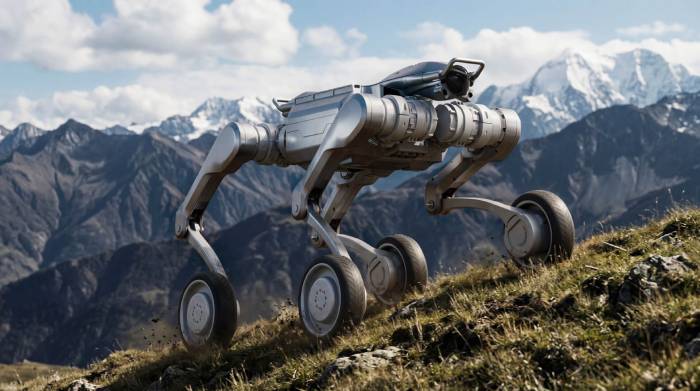
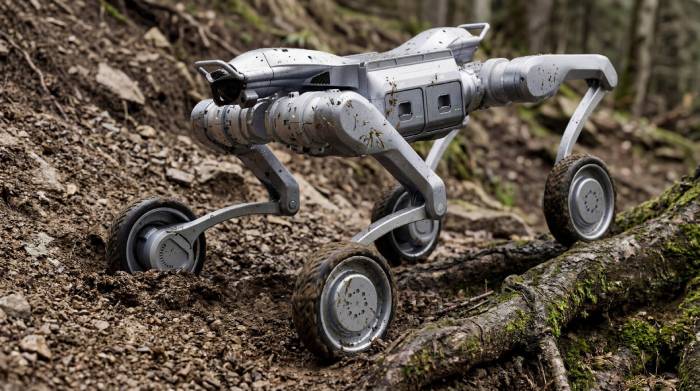
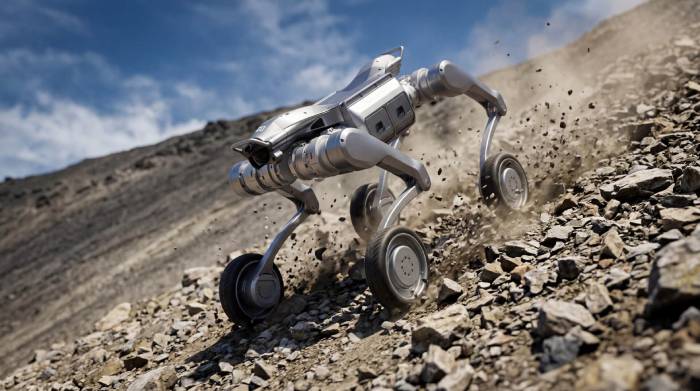
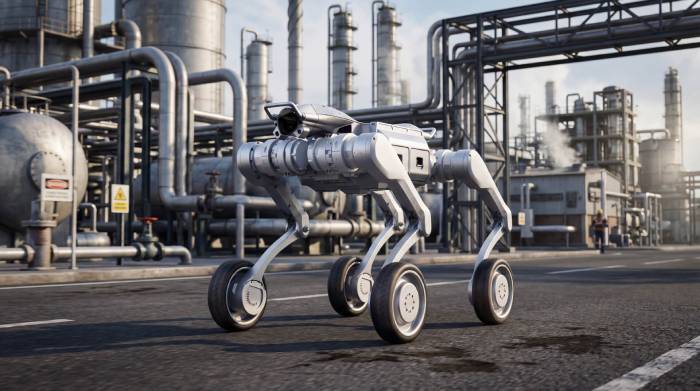
The Unitree A2-W Pro Quadruped Robot Dog elevates the wheel-leg hybrid platform for custom industry solutions that demand superior sensing and connectivity. It shares the A2-W's dimensions (900mm×440mm×625mm standing), ~52kg weight with dual batteries, 16 degrees of freedom, high-torque motors, and hybrid mobility that combines efficient rolling with full stepping over obstacles. Endurance remains excellent at more than 3.5 hours / ~35km unloaded and more than 1.5 hours / ~15km with 25kg, while continuous walking load stays at about 25kg (ideally ~35kg) and maximum standing load reaches about 100kg. Speeds reach 0–3m/s (up to ~6m/s), with the ability to tackle 45° slopes and 30cm steps across a -4° to 131°F operating range. Dual hot-swappable batteries ensure near-unlimited runtime through seamless swaps.
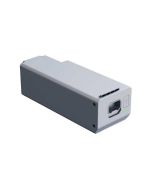
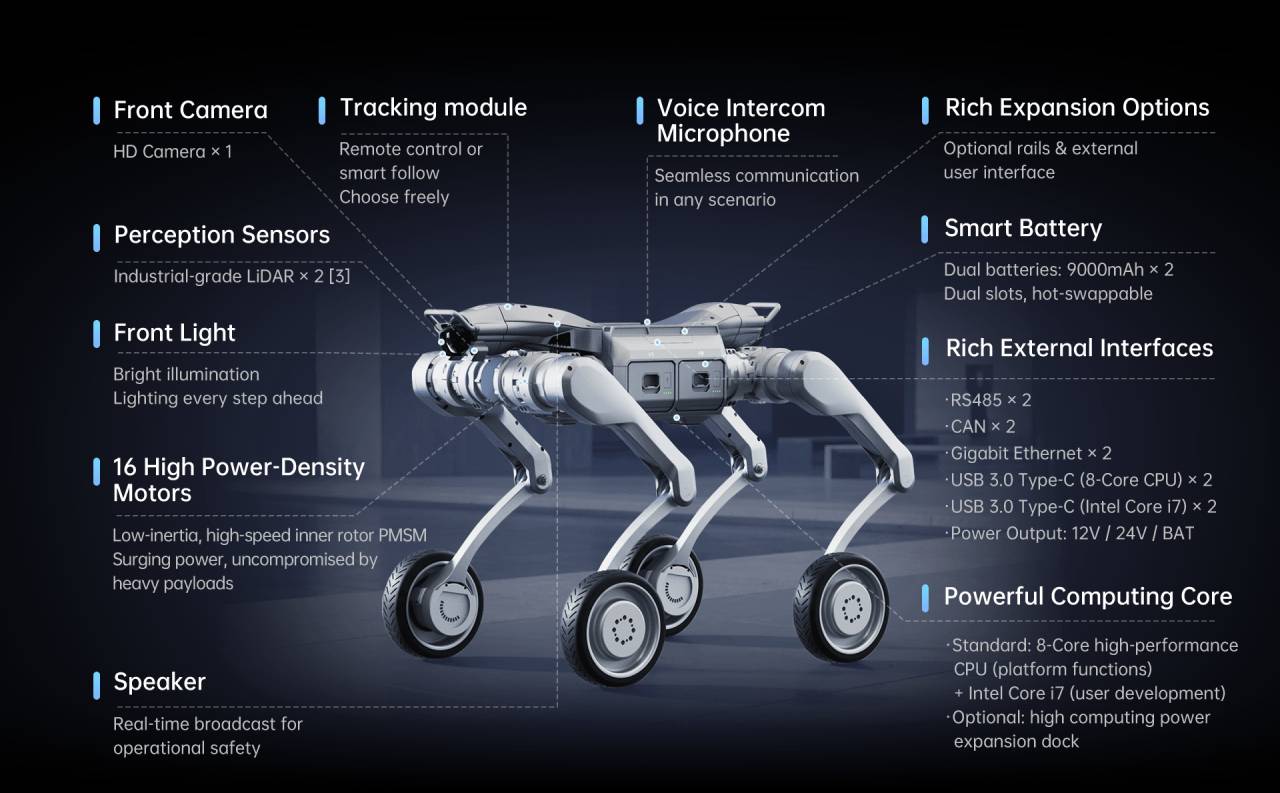
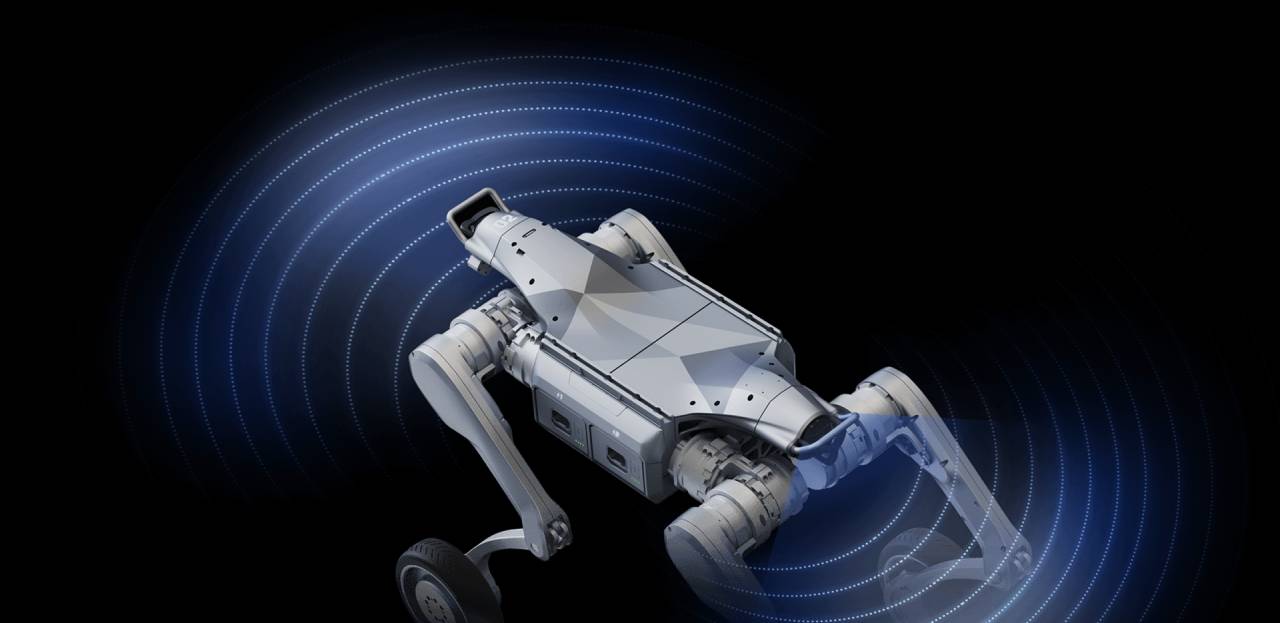
The Pro configuration adds dual industrial LiDARs (front and rear) with an HD camera and front light for dual-sided, zero-blind-spot perception and greater accuracy -- ideal for autonomous navigation and mapping. It includes expanded GPS, 4G, and wireless vector follow as standard features, an optional high computing power expansion dock, and enhanced IP56–IP67 protection (core components rated IP67). The same open architecture supports continuous OTA upgrades, secondary development, rich external interfaces, and onboard compute (8-core CPU + Intel Core i7). It is particularly well suited to large-scale park logistics, industrial inspection routes, and emergency response where long-distance efficiency and reliable outdoor autonomy are critical.
Compared with the standard Unitree A2-W, the Pro adds the second LiDAR for full dual-sided awareness, upgrades connectivity modules from optional to expanded, improves sealing on key components, and provides high-compute expansion options -- while delivering identical payload, endurance, and hybrid mobility performance for the most demanding deployments.
Downloads